
“This marks only the beginning of our journey — we remain steadfast in our commitment to strengthening democratic institutions and ensuring ever-greater transparency and accountability in our legislatures,” said Speaker of the Delhi Legislative Assembly, Vijender Gupta, while addressing the press conference today following the conclusion of the two-day (24–25 August 2025) All India Speakers’ Conference 2025. Hon’ble Speaker unveiled the Delhi Assembly Fellowship and Research Programme to promote rigorous study of parliamentary history and practices, including the contributions of Shri Veer Vithalbhai Patel and broader reformist agendas. He noted that the fellowship will enable scholars and researchers to study legislative practices in depth and share their findings with the public, thereby strengthening transparency and democratic literacy. Gupta further informed that digitisation of the Assembly Library is underway and will be completed within six months, ensuring wider access to records and research materials. These were highlighted as some of the key takeaways of the conference.
Speaker emphasised that the centenary commemoration of Veer Vithalbhai Patel’s assumption of charge as the first Indian Speaker of the Central Legislative Assembly was not only a historic celebration but also a forward-looking exercise to renew the commitment of India’s legislatures to transparency, accountability, and citizen-centric governance. Shri Gupta thanked members of the media for their coverage, which ensured that the achievements of the conference reached citizens across the nation. He underlined that with 29 out of 31 presiding officers of legislative assemblies and councils participating, the event reflected a strong spirit of federal unity and stood as one of the most significant gatherings of its kind.
Delegates were also hosted at special dinners which provided opportunities for informal interaction. On 23rd August, a Welcome Dinner was hosted by the Chief Minister of Delhi, Rekha Gupta, . On 24th August, Lok Sabha Speaker, Om Birla, hosted a dinner within the premises of Parliament. The conference concluded on 25th August with a dinner hosted by the Lieutenant Governor of Delhi, Vinai Kumar Saxena, at Raj Niwas, which provided a gracious and memorable finale to the historic gathering.
In addition to the formal sessions, Shri Gupta recalled that visiting delegates were taken on a guided visit to Bansera Park as part of the programme, allowing them to experience the capital’s environmental and cultural heritage. Delegates also paid homage at the Bhim Rao Ambedkar International Memorial, reflecting the Assembly’s resolve to honour the vision of social justice and equality embodied in Dr. Ambedkar’s legacy.
Gupta highlighted the significant outcomes of the conference. Foremost among them was the proposal of a National Legislative Index, an ambitious initiative of the Delhi Assembly to create a complete database that would evaluate and analyse the productivity and efficiency of legislative assemblies across the country. The index, he explained, will become a benchmark for democratic performance and a vital tool for ensuring transparency and accountability in law-making.
Speaker further announced that, as desired by Hon’ble Union Minister of Home Affairs , Amit Shah, the Delhi Assembly is building a repository of legislative records, including verbatim transcripts of proceedings.

Gupta informed that the Assembly has already acquired verbatim records from the period 1924 to 1930, with every session being preserved in detail. Translation work on these records has already commenced, ensuring that the historic debates of that era — covering issues such as elementary education, women’s rights, child marriage, and social reform — are made available to the public in accessible form. He also announced that research work based on these proceedings would be carried out under the Delhi Assembly Fellowship and presented to the public at large.
An eleven-volume collection on Madan Mohan Malviya —unveiled earlier by Hon’ble Prime Minister, Narendra Modi — was formally presented during the conference to Lok Sabha Speaker, Shri Om Birla. He announced that the collection will be translated into Hindi and distributed to libraries across the country, enabling students, researchers, and citizens to access these invaluable works. He also stated that copies would be sent to libraries nationwide as part of an effort to make parliamentary history available to the widest possible audience.
Speaker also unveiled the Delhi Assembly Fellowship and Research Programme, designed to foster rigorous academic study of parliamentary history and practices. The fellowship will not only study the contributions of Shri Veer Viththalbhai Patel but will also analyse the broader reformist agenda that shaped India’s democratic institutions. He underlined that the fellowship will give scholars, students, and researchers the opportunity to study parliamentary practices in depth and ensure that their findings are made available to the public, enhancing transparency and strengthening democratic literacy. Shri Gupta also informed that the digitisation of the Delhi Assembly Library is underway and will be completed within six months, ensuring that records and research materials become easily accessible to citizens and researchers.
Further , Speaker Gupta placed on record his heartfelt gratitude to Hon’ble Prime Minister, Narendra Modi, for extending full support to the Delhi Legislative Assembly, and acknowledged the partnership of the Central Government and the National Archives. He noted that this cooperation has been crucial in preserving, digitising, and disseminating archival records, and in transforming Delhi Vidhan Sabha into a true institution of both heritage and progress.
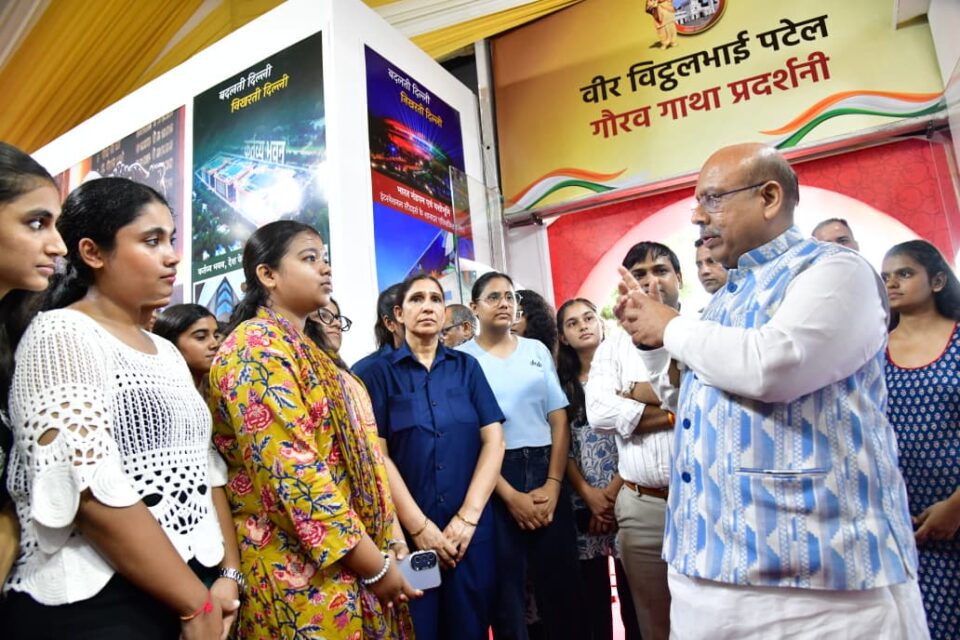
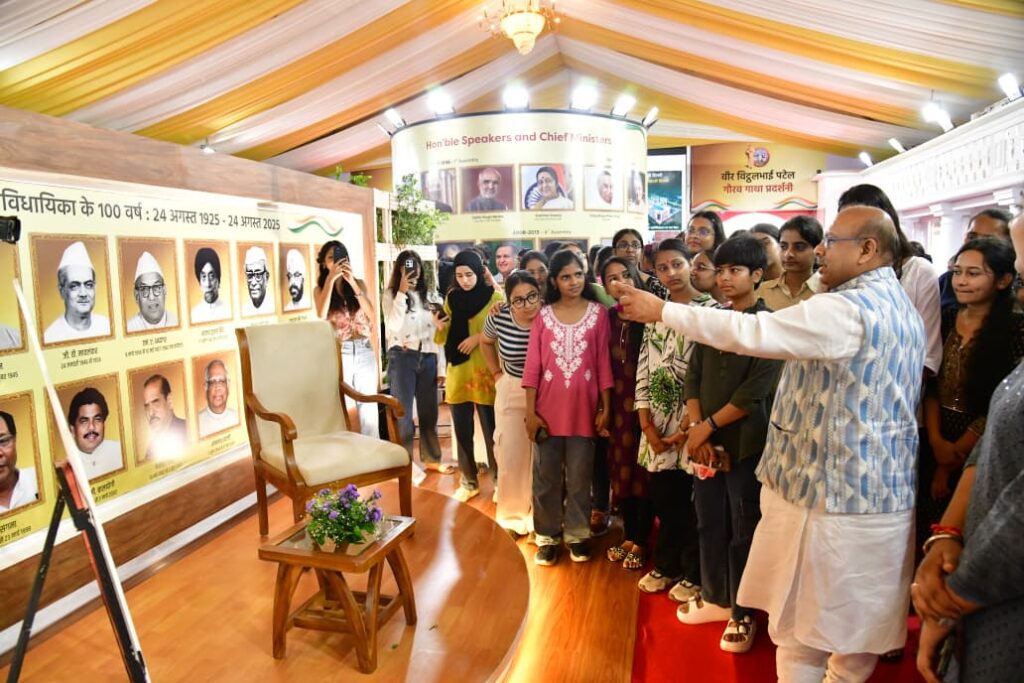
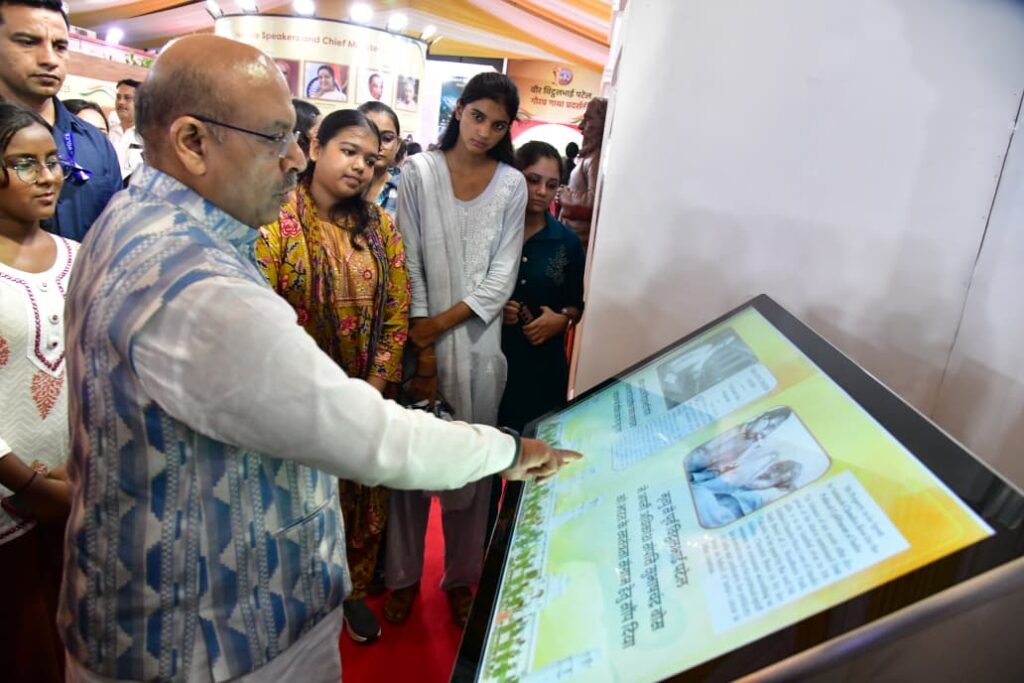
Gupta further announced that the exhibition “ Veer Viththalbhai ki Gaurav Gatha”, inaugurated during the conference, will remain open to the general public at Delhi Vidhan Sabha from 26th August until 31st August 2025, 6:00 PM. On the very first day, a batch of around 250 students from Indraprastha College, University of Delhi, visited the exhibition, followed by another group of students from Rajmas College, University of Delhi, ensuring that young citizens were among the first to engage with this living tribute to India’s democratic legacy. Thereafter, the exhibition will travel to different constituencies of the Delhi , allowing citizens across the capital to connect with the life and contributions of Shri Viththalbhai Patel. In time, the exhibition will be established as a permanent feature in the Vidhan Sabha Gallery, with the Tiffin Room ( Earlier Gallow room )being transformed into a dedicated exhibition hall. Hon’ble Speaker expressed confidence that the exhibition would witness large public participation and stand as a lasting celebration of India’s democratic heritage.
Speaker concluded that this was not the end but a renewed beginning: “We are fully committed to supporting and strengthening democratic processes, fostering research, ensuring transparency, and upholding the values of accountability and participation that define India’s parliamentary democracy. Guided by the spirit of ‘Virasat bhi, Vikas bhi’, we will continue to harmonise progress with our timeless heritage, ensuring that our legislatures remain both modern and deeply rooted in democratic traditions.”
