
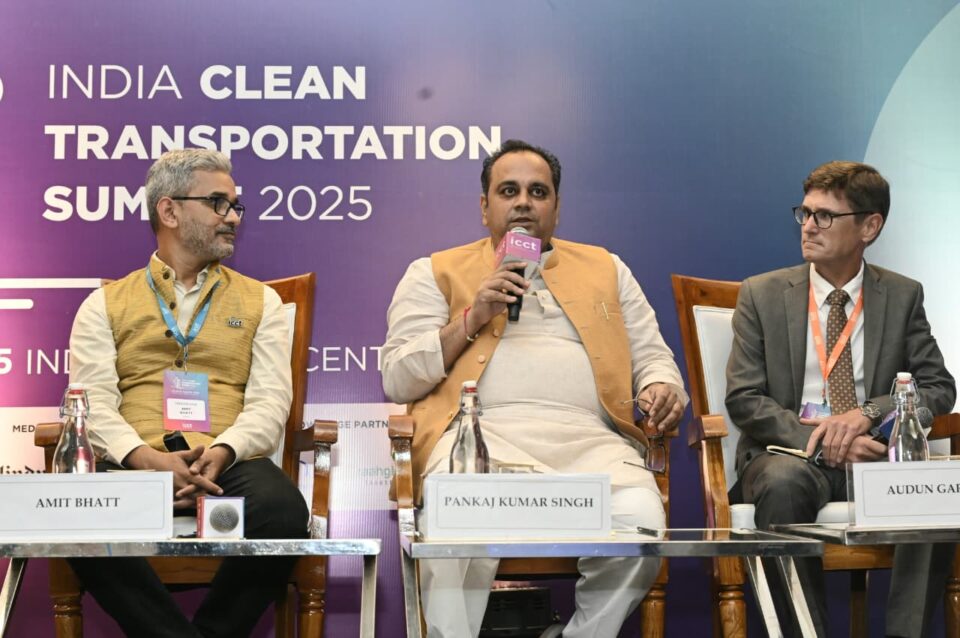
Delhi had around 400 electric buses. Today, the fleet has grown to over 3,400, and by the end of this year we will have nearly 6,000 electric buses in operation. Government’s strategy is of partnering with Resident Welfare Associations (RWAs), local bodies, and private stakeholders to create accessible charging points across the city. Plans are also underway to develop facilities under flyovers and in outer Delhi in partnership with private parties to strengthen the EV charging infrastructure.
Transport Minister also reiterated Delhi’s commitment to scaling up electric buses and improving last-mile connectivity. He specifically highlighted the role of smaller ‘Devi Buses’, which are already reaching areas previously underserved by public transport. “We have taken our EV buses to localities where buses never reached earlier. By deploying smaller EV buses for last-mile connectivity, we have delivered direct benefits to the common people,” Dr. Singh said.
Dr. Singh explained that Delhi will require around 7,000–8,000 electric buses, which will be cater to the city’s transport needs. “Through route rationalisation and effective deployment, we will be able to meet Delhi’s mobility requirements efficiently without unnecessary fleet expansion,” he said.
He also confirmed that Delhi’s EV Policy has been extended until February next year, with a revised Delhi EV Policy 2.0 in the works. “As far as the EV Policy is concerned—it has been extended till February. We will seek public opinion, and the suggestions we receive will be incorporated into the policy,” he said. The new policy will focus on charging networks, industry collaboration, vehicle scrappage, and public participation.
Dr. Singh stressed the important “Delhi was once being called a gas chamber. We must change this. The EV Policy and electric mobility are the most powerful tools to control pollution—whether it is through buses, two-wheelers, or four-wheelers.”
On the international front, Dr. Singh welcomed the opportunity to learn from global best practices. Referring to the dialogue with Oslo, he said: “Friendship means helping each other grow. Delhi and Oslo can learn from each other’s successes and challenges. This dialogue will set the Delhi-Oslo Smart Transport DOSTI Initiative, showing how cities can learn together to combat climate change and build smarter mobility systems.”
Mr. Audun Garberg shared insights from Oslo’s EV journey, particularly the city’s early push for public charging since 2006, its toll reforms to incentivize EVs, and its focus on heavy-duty vehicle electrification. He underlined that Delhi’s efforts in expanding bus electrification and charging infrastructure could provide valuable lessons for European cities as well. “In Norway, we have set up charging points even in narrow street spaces and has prioritised housing co-operatives by enabling charging facilities within their parking areas. While challenges remain in electrifying heavy transport, our holistic planning is paving the way for long-term sustainable mobility,” he said.
Concluding his address, Dr. Singh said: “Our goal is to transform Delhi into a global EV model city. By strengthening infrastructure and learning from international partners like Oslo, we will ensure that clean mobility becomes a reality for every citizen.”
