
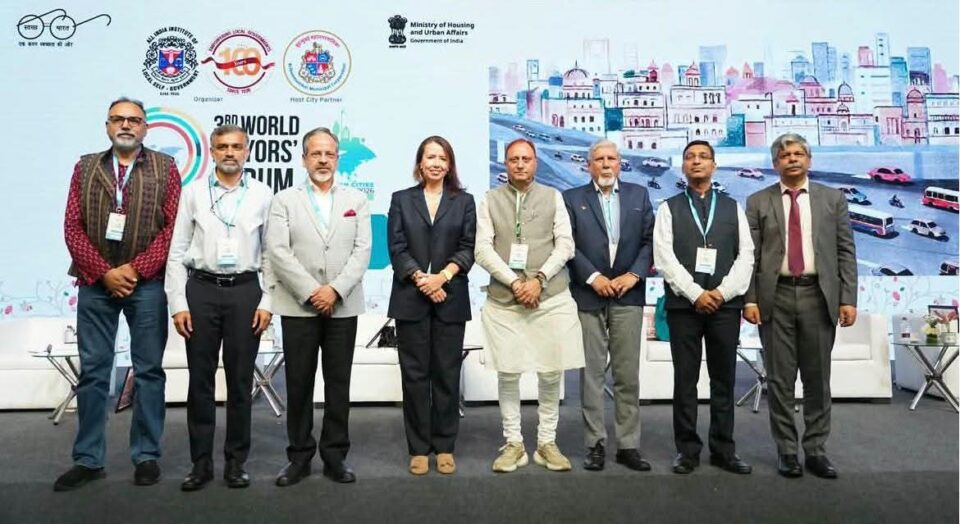
Emphasising the role of citizen participation in building sustainable and livable cities, Delhi Mayor Pravesh Wahi on Thursday said India’s urban transformation journey towards 2047 must be driven by better sanitation, scientific waste management and collective efforts to tackle environmental challenges.
Representing the national capital at the Third World Mayors Forum in Mumbai, Wahi participated in a technical session titled “Reimagining Cities: Urban India@2047”, where he outlined Delhi’s experiences and challenges in urban development, sanitation management and pollution control.
Addressing the gathering, the Mayor described the Swachh Bharat Mission, launched on October 2, 2014 under Prime Minister Narendra Modi, as a landmark initiative that transformed sanitation from a government programme into a nationwide people’s movement. He said the campaign has significantly improved access to toilets, accelerated efforts to eliminate open defecation and strengthened public awareness about hygiene and health.
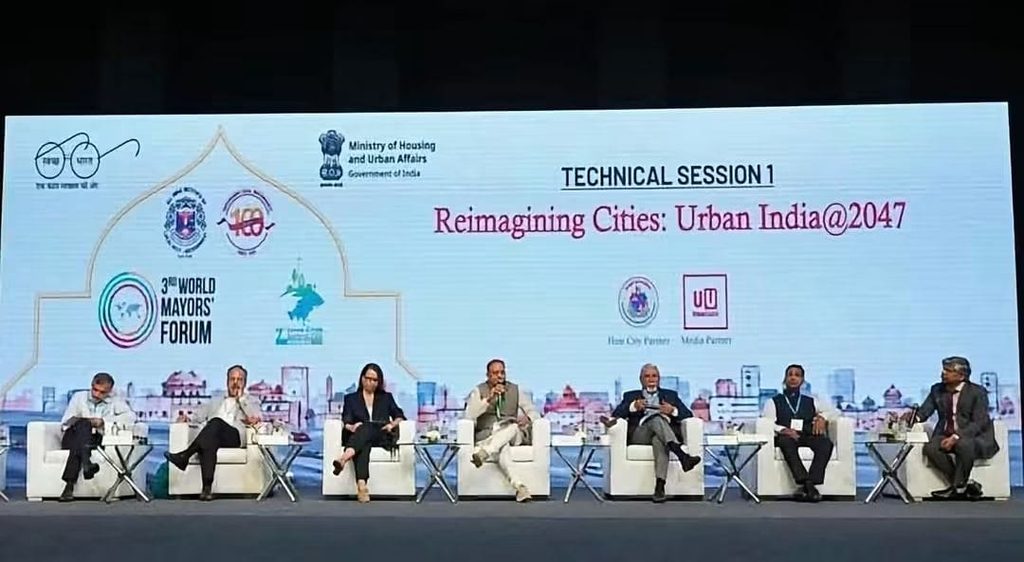
Wahi noted that the sanitation drive has played a critical role in protecting the dignity, safety and health of women across the country. According to him, the mission succeeded because it encouraged citizens to view cleanliness not as an occasional activity or institutional responsibility, but as a shared social commitment.
Turning to environmental concerns, the Mayor acknowledged that Delhi’s status as one of India’s most densely populated cities presents unique challenges in controlling air pollution. He said coordinated efforts by the Central Government, Delhi Government and the Municipal Corporation of Delhi (MCD) are contributing to measurable improvements in air quality management.
Among the measures highlighted were the development of national highways and expressways around Delhi to divert non-destination traffic away from the capital, reducing vehicular congestion. He also cited the deployment of mechanised road-sweeping machines, water sprinklers and continuous air-quality monitoring systems as important interventions in the fight against pollution.
On solid waste management, Wahi said the Swachh Bharat Mission-Urban 2.0 has provided a comprehensive framework for creating garbage-free cities. In line with this vision, the MCD has intensified initiatives such as source segregation of waste, door-to-door collection, scientific processing of municipal waste, recycling and the remediation of legacy waste accumulated at landfill sites.
The Mayor stressed that effective urban governance in the coming decades would depend on integrating sanitation, environmental sustainability and public health into city planning. He said rapidly expanding urban centres must adopt innovative and citizen-centric solutions to improve quality of life while maintaining ecological balance.
Expressing confidence in Delhi’s future, Wahi said the Municipal Corporation would continue working towards higher standards of cleanliness, public health and civic services under the guidance of Prime Minister Narendra Modi and the leadership of Delhi Chief Minister Rekha Gupta. He reiterated the civic body’s commitment to transforming Delhi into a cleaner, healthier and more sustainable metropolis through coordinated action by government agencies and active public participation.
