
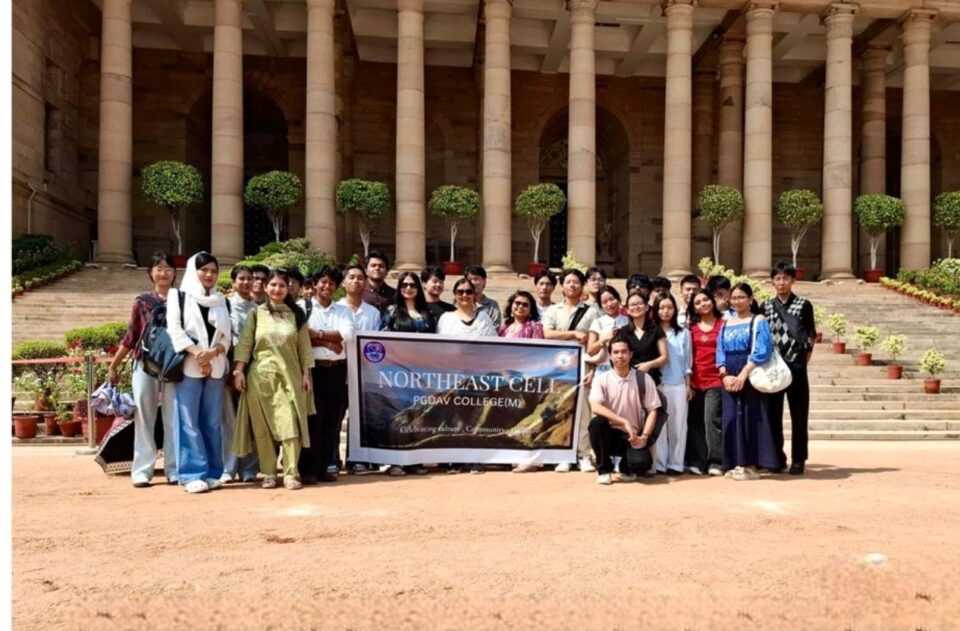
For students who have travelled from the hills of Northeast India to pursue higher education in the national capital, a visit to Rashtrapati Bhavan became more than an educational excursion. It offered an opportunity to connect with India's shared history, discover the cultural threads linking different regions of the country, and find reflections of their own identities within the nation's heritage.
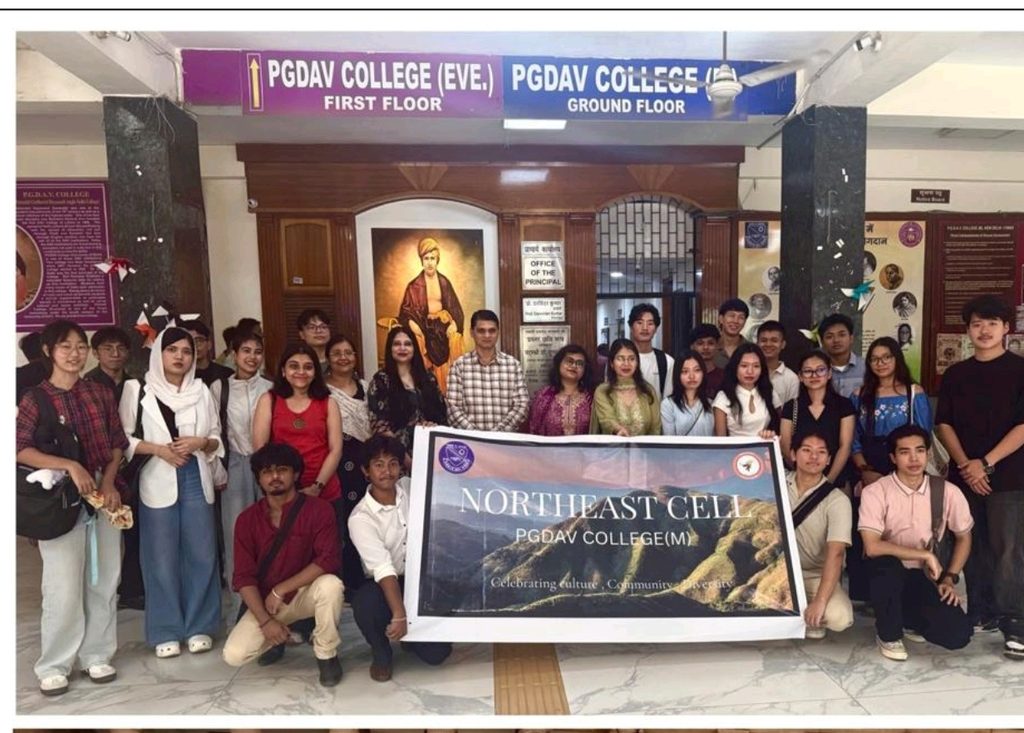
The North East Cell of PGDAV College, University of Delhi, organised the educational visit to Rashtrapati Bhavan on October 9, 2026. The programme was inaugurated by Principal Prof. Darvinder Kumar, whose encouraging words motivated the students. His continued support has also helped foster an inclusive and welcoming environment for students from Northeast India.For many participants, it was their first visit to Rashtrapati Bhavan, the official residence of the President of India.
The experience offered a closer look at a landmark associated with the country’s constitutional institutions, history and cultural legacy.Finding a sense of belonging in the nation’s heritageOne of the most meaningful aspects of the visit was discovering representations of their home states in the Rashtrapati Bhavan museum.
For students living away from their native places, seeing elements of their regional identity represented within a national institution offered a sense of familiarity and belonging.The experience also highlighted an important aspect of India’s cultural identity: national unity does not require people to leave behind their regional roots. Instead, the country’s diversity draws strength from the traditions, languages, art forms and histories of its many regions.For students from the Northeast, whose cultural experiences and traditions are sometimes less visible in mainstream narratives, such encounters can help reinforce the feeling that their communities are an integral part of India’s national story.
From Persian art to diplomatic gifts
History through objectsThe students explored the Persian mural depicting Fath-Ali Shah on a hunt in Ashok Mandap, intricately embroidered textiles, historical artefacts and diplomatic gifts presented by different countries.Each offered a glimpse into a different aspect of India’s cultural and historical connections. The embroidered textiles reflected the richness of traditional craftsmanship, while the historical artefacts provided insights into earlier periods.
Diplomatic gifts, meanwhile, illustrated how art and cultural objects can serve as symbols of friendship and engagement between nations.The visit also introduced students to the architectural vision of Edwin Lutyens and the evolution of Lutyens’ Delhi.
The experience helped them understand how architecture can reflect the political history, artistic influences and urban planning that have shaped the capital.By bringing together art, architecture, history and diplomacy, the visit turned the museum into a learning space beyond the conventional classroom.
An experience that goes beyond textbooks Dr. Anubhuti Mishra, Convenor of the North East Cell, said, “This visit has instilled national pride and will inspire students to contribute meaningfully to the nation.”Faculty members Dr. Anindita Goldar, Dr. Reshma Tabassum and Ms. Anjali Tomar accompanied the students during the visit.
Vinika K. Chishi, President of the Cell from Nagaland, described the experience as life-enriching. General Secretary Lucky Warepam from Manipur expressed his eagerness to share the memories with people in his hometown and celebrate India’s rich and diverse heritage.
Their reflections underline the value of educational visits that allow students to experience history firsthand rather than encounter it only through textbooks. Such initiatives can encourage curiosity, deepen cultural understanding and create opportunities for meaningful conversations about identity and belonging.
For the students, the experience was not simply about viewing an iconic building or its priceless collections. It was also about recognising how their home states, traditions and identities form part of a larger national narrative.Ultimately, the strength of a diverse nation lies not in making every community the same, but in ensuring that every community feels seen, respected and included. For the students of PGDAV College’s North East Cell, the visit offered a memorable reminder that India’s shared heritage has room for every region and every story.Hashtags:
Building national unity through cultural understandingThe visit to Rashtrapati Bhavan demonstrated how heritage education can bring students closer to the history and institutions of their country while affirming the importance of their own cultural backgrounds.
